
Oversized T-Shirts: Worth It?
Oversized T-Shirts: Worth It?
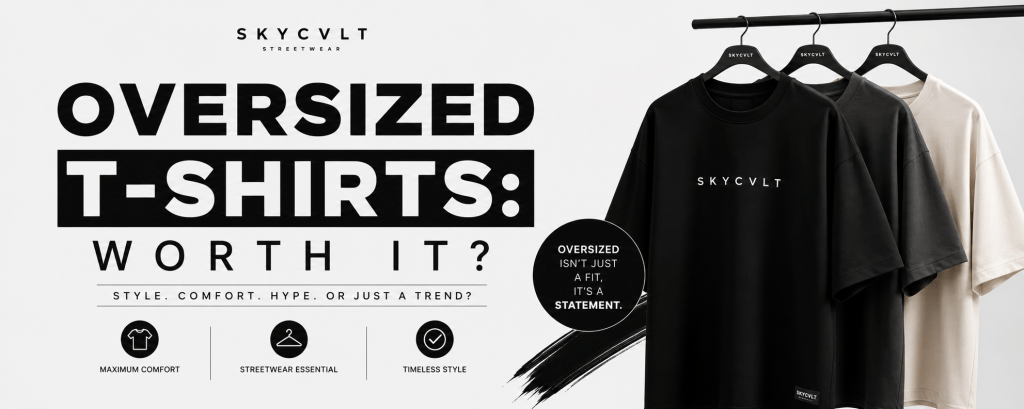
Every few months, someone in the comments asks the same question: are oversized t-shirts actually a good buy, or is it just a trend riding on hype? Fair question. Oversized fits have gone from “skater kid thing” to “everyone’s wardrobe staple” pretty fast, and whenever something blows up that quickly, it’s reasonable to wonder if it’s substance or just noise.
So let’s actually break it down instead of just saying yes because it’s popular.
What “Oversized” Actually Means
People throw the word around loosely, and that’s part of the confusion. Oversized isn’t just “bought a size too big.” A properly designed oversized tee has a dropped shoulder seam, a boxier body, and sleeve proportions that are built for the bigger fit — not just a regular tee scaled up. That distinction matters more than people realize, because it’s the difference between looking intentionally relaxed and looking like you grabbed the wrong size off the rack.
This is also where a lot of cheaper options fail. They take a standard pattern and size it up without adjusting shoulder drop or sleeve length, and the result just looks sloppy instead of styled.
The Case For It
Comfort that doesn’t feel like a compromise. Fitted tees can look sharp, but they’re not exactly the thing you reach for after a long day. Oversized tees let you have comfort without looking like you gave up on dressing well — which is a real reason they’ve stuck around longer than most trends.
They’re more forgiving on body type. A well-cut oversized tee skims rather than clings, which works across a wider range of body shapes than a fitted cut does. That’s a practical reason beyond aesthetics for why so many people gravitate toward them.
Styling versatility. Tucked, half-tucked, paired with joggers, layered under a jacket, worn alone with shorts — oversized tees flex across a lot more outfit combinations than fitted basics do. One piece, multiple looks, which is genuinely useful if you’re not trying to own forty different shirts.
They photograph better for streetwear-style content. This sounds shallow, but for resellers and small brands, it’s a real factor — oversized cuts drape in a way that reads well in flat lays and on-body shots, which matters if your product is also going to live on Instagram.
The Case Against It
Fit inconsistency across brands is a real problem. “Oversized” means something different depending on which brand you’re buying from. Some genuinely nail the silhouette; others just slap a bigger size number on a regular pattern and call it oversized. Buying online without knowing a brand’s specific fit can be a gamble.
It’s not universally flattering at every length. Oversized tees that run too long can cut proportions in a way that doesn’t read as relaxed — it reads as ill-fitting. Length matters just as much as width, and that’s the detail brands skip most often.
It can read as lazy if styled wrong. An oversized tee with nothing else considered — wrong shoe choice, wrong bottoms, no attention to proportion — can look thrown-together rather than deliberate. The fit does some of the work, but not all of it.
So, Worth It?
If you’re buying from a brand that actually understands proportion — correct shoulder drop, sleeve length that matches the body length, fabric with enough weight to hold its shape instead of sagging — then yes, it’s worth it. The comfort-to-style ratio is genuinely hard to beat once you’ve got a properly cut piece.
If you’re buying generic “big size = oversized” tees without checking the actual pattern, you’re rolling the dice on whether it looks intentional or just baggy.
The trend isn’t the problem. The execution is. That’s really the whole answer.